Research Education
PerformanceLabsUK supplies third party tested research reference materials for in vitro laboratory and scientific research use only, not for human or veterinary use.
GLP-1, GIP and glucagon receptor agonists are among the most widely studied compound classes in metabolic research. Published literature spans receptor binding, glucose handling models and energy expenditure pathways. This article summarises what that research examines, not how any compound might be used.
These are peptide compounds studied for their interaction with receptors involved in glucose and energy metabolism. GLP-1 (glucagon-like peptide-1) receptor agonists engage a receptor expressed in the pancreas, gut and central nervous system. GIP (glucose-dependent insulinotropic polypeptide) receptor agonists act on a related but distinct receptor pathway. Some research compounds, including tirzepatide-class and retatrutide-class molecules, are studied for combined action across GLP-1, GIP and glucagon receptors simultaneously, which is why the published literature often describes them as multi-receptor agonists.
Human clinical research into GLP-1 and multi-receptor agonists has expanded significantly in the published literature over the past decade, with GIP/GLP-1 dual agonists reaching later-stage clinical trials for metabolic endpoints. Triple agonists such as retatrutide-class molecules are studied at an earlier stage, with published data concentrated in trial-registry findings and peer-reviewed early-phase results. PerformanceLabsUK supplies these compounds strictly as research reference material for laboratory use, not for human administration.
| Compound class | Receptors studied | Research stage (published literature) |
|---|---|---|
| GLP-1 selective agonists | GLP-1 receptor | Extensive, multi-phase clinical literature |
| GIP/GLP-1 dual agonists | GIP + GLP-1 receptors | Later-stage clinical research published |
| GIP/GLP-1/glucagon triple agonists (e.g. retatrutide-class) | GIP + GLP-1 + glucagon receptors | Early-to-mid-stage published research |
PerformanceLabsUK supplies GLP-1, GIP and glucagon receptor agonist research compounds as third party tested research reference material, accompanied by a batch-specific Certificate of Analysis. These materials are supplied strictly for in vitro laboratory and scientific research use, not for human or veterinary use.

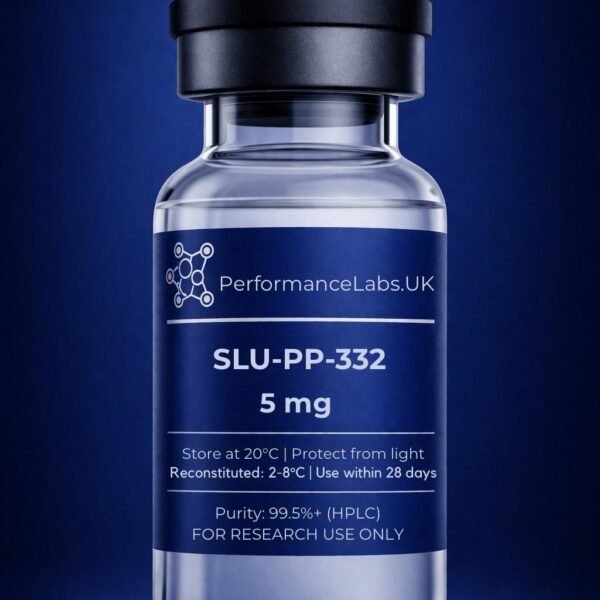 SLU-PP-332£39.99In stock
Certificate of Analysis libraryBrowse all reference materialsReconstitution calculatorMore research articles
Supplied for in vitro laboratory and scientific research use only. Not for human or veterinary use. Free UK delivery on orders over £75.

You must be 18 or over to enter this site.
WARNING: This website contains age-restricted content.
Join the list for new compound drops, batch COAs, and plain English research notes. Your code arrives straight away.
All products are supplied strictly for in vitro laboratory research use. Not for human or veterinary consumption.