PerformanceLabsUK supplies third party tested research reference peptides and compounds for laboratory investigation into metabolic biology, cellular recovery research, cognitive research, and longevity science.
£79.99
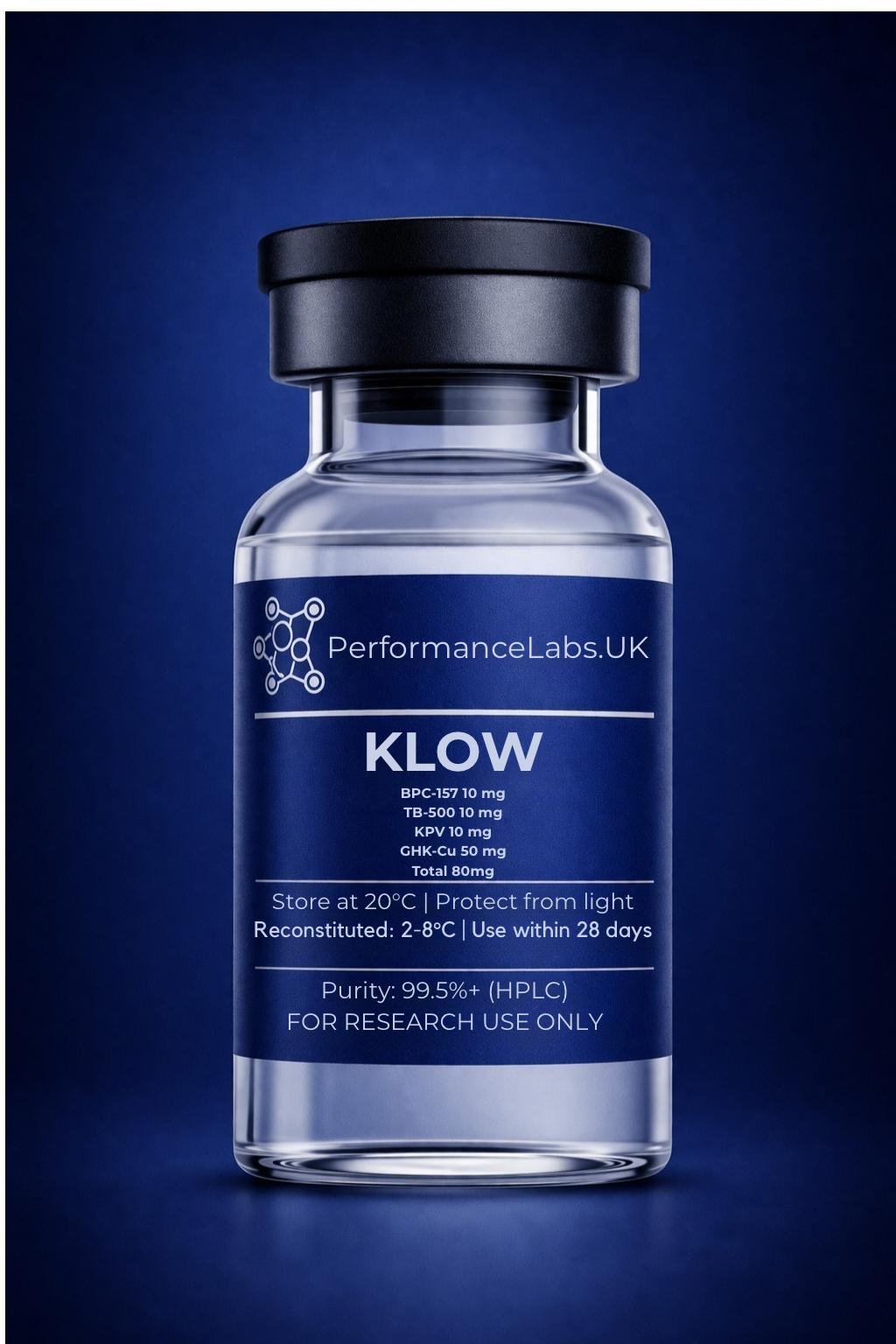
KLOW is a multi-peptide research reference blend combining four compounds: BPC-157 (Body Protection Compound-157), TB-500 (Thymosin Beta-4 analogue), GHK-Cu (copper tripeptide), and KPV (alpha-MSH tripeptide fragment). Each constituent has its own established research literature; together they span published research fields including regenerative biology, cellular repair mechanisms, anti-inflammatory signalling, and longevity-associated pathways. Supplied for in vitro laboratory and scientific research use only, not for human or veterinary use.
Also available in a research set: The Verified Three (Retatrutide, KLOW + MOTS-c). See all research sets.
PLUK Verification Guarantee
Every vial ships with a batch-specific certificate of analysis from Janoshik, a third party laboratory, verifiable by task number. If any product fails to match its published certificate, we refund or replace it. That is the whole condition: the certificate, nothing else.
Your statutory rights are unaffected. How to verify a certificate and how the guarantee works.
KLOW combines four extensively studied peptides. Specifically, these include BPC-157, TB-500, GHK-Cu, and KPV. PerformanceLabsUK, in turn, supplies this blend strictly as a research reference material for in vitro laboratory investigation. Therefore, researchers must not use KLOW for human or veterinary purposes.
Primary Research Areas: Angiogenesis | Actin-Binding Proteins | Collagen & Elastin Gene Expression | NF-kB Signalling | Cell Migration Assays
PerformanceLabsUK has every KLOW batch tested by a third-party laboratory. A batch-specific Certificate of Analysis is available on request and will be published in our COA Library. Additionally, researchers investigating the individual component peptides may also wish to review our GHK-Cu and KPV research peptide listings. For structural and chemical reference data, see the independent PubChem search results.
REGULATORY NOTICE
FOR LABORATORY RESEARCH USE ONLY, NOT INTENDED FOR HUMAN OR VETERINARY CONSUMPTION
Not a medicinal product, pharmaceutical, food supplement, or cosmetic. Not evaluated or approved by the MHRA, FDA, or any regulatory authority for use in humans or animals. Must not be used for diagnostic, therapeutic, or preventative purposes. Must be handled only by qualified professionals within a suitable research environment. By purchasing you confirm research-only use. Purchasers must be 18+. PerformanceLabsUK accepts no liability for misuse.
Further reading: KLOW: Four Peptides in Combined Research Literature.
Learn more about the science and laboratory context in our Education Hub. For UK dispatch information see Shipping & Delivery. For order policy visit Refunds & Returns or our FAQ. Questions? Contact PerformanceLabsUK.

You must be 18 or over to enter this site.
WARNING: This website contains age-restricted content.
Join the list for new compound drops, batch COAs, and plain English research notes. Your code arrives straight away.
All products are supplied strictly for in vitro laboratory research use. Not for human or veterinary consumption.
Notify me when this is back in stock
Leave an email address and we will send one message when this research reference material is available again. It is not added to any mailing list, and you can ask us to remove it at any time.

Reviews
There are no reviews yet.